
There are places that history remembers.
And there are places that history almost lost.
The mountains of Chachapoyas belong to the latter.
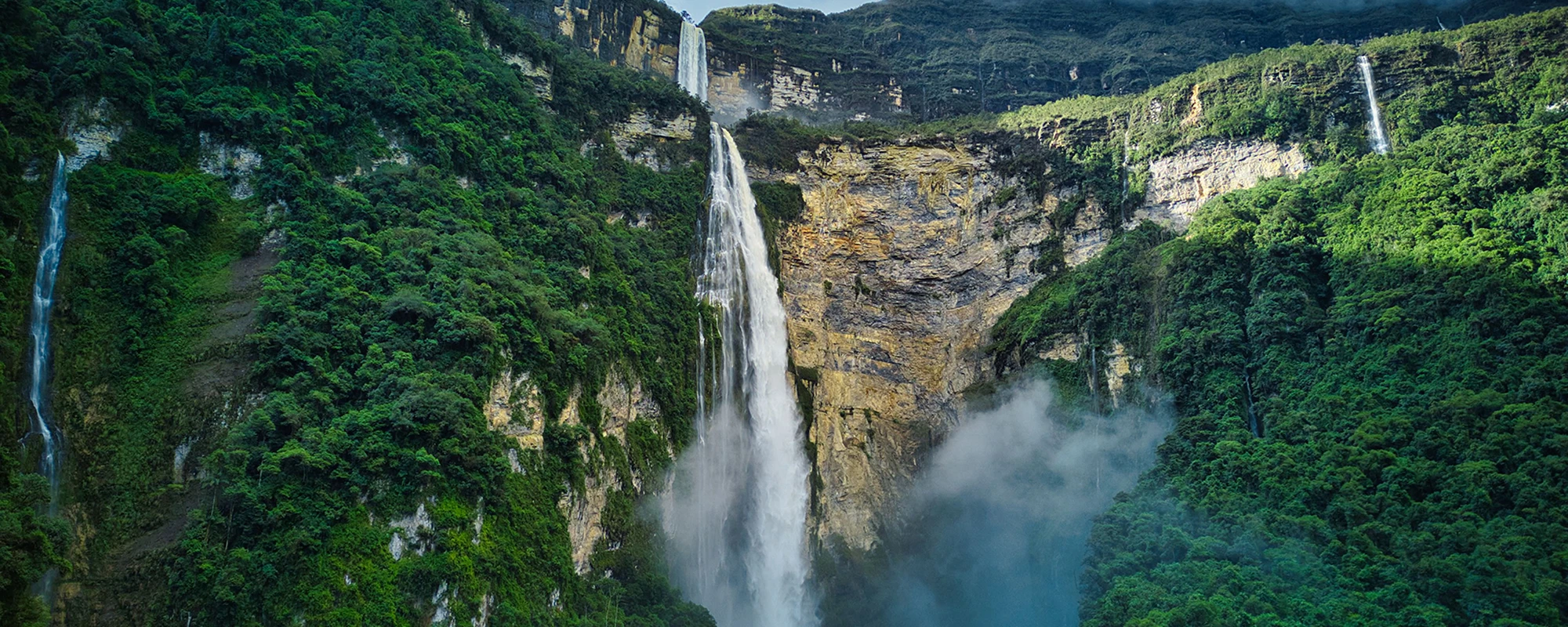
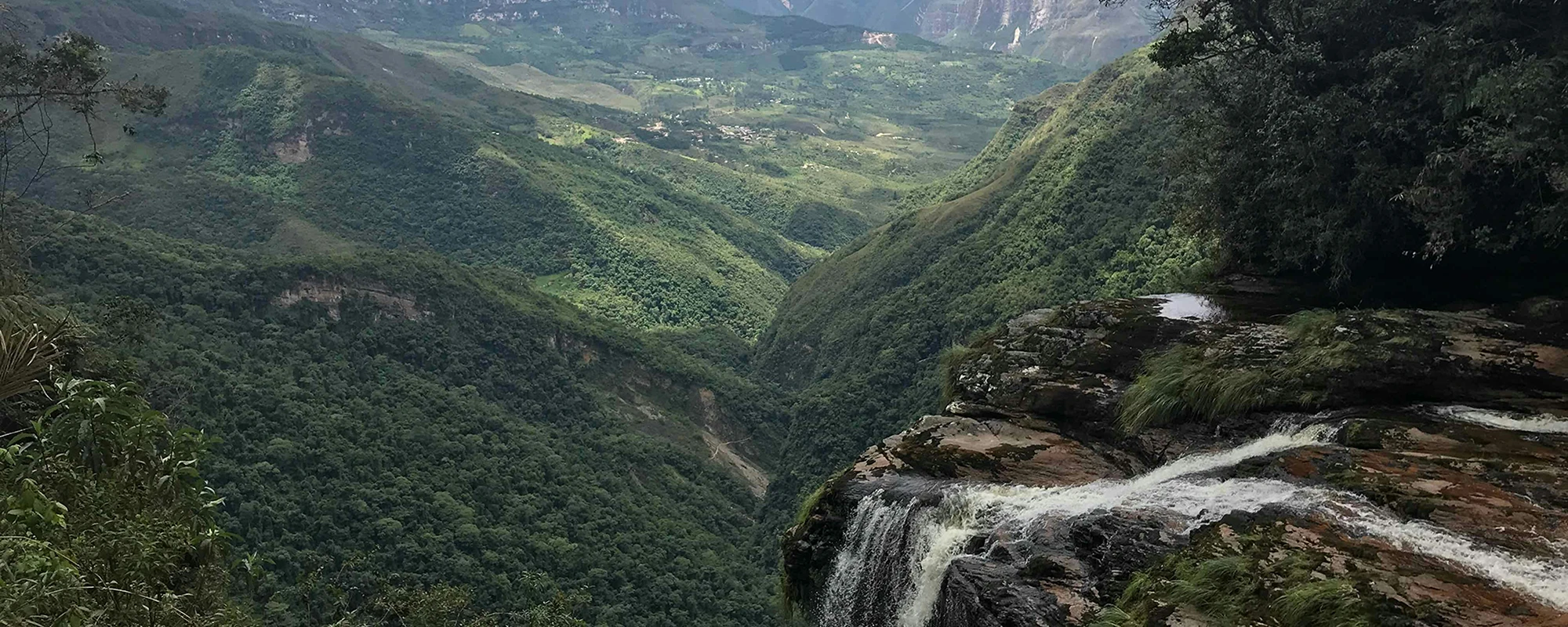
Hidden within the cloud forests of northern Peru, where the eastern Andes dissolve into the vastness of the Amazon Basin, lies a landscape that still feels remarkably untouched by the modern imagination. Here, ridgelines vanish beneath shifting veils of mist. Ancient pathways disappear into forests draped in orchids and moss. Waterfalls plunge from impossible heights into valleys so deep they seem to belong to another age.
And somewhere among these mountains stands a fortress.
Not abandoned.
Not forgotten.
Simply waiting.
Waiting for those willing to travel beyond the familiar maps of Peru.
For generations, travelers crossed oceans in search of civilizations hidden by geography and time. The great age of exploration may have officially ended long ago, yet there remain places that continue to evoke that same sense of discovery.
Chachapoyas is one of them.
Because unlike many of the world’s celebrated archaeological destinations, this region has preserved something increasingly rare:
Mystery.
Into the Realm of the Cloud Warriors
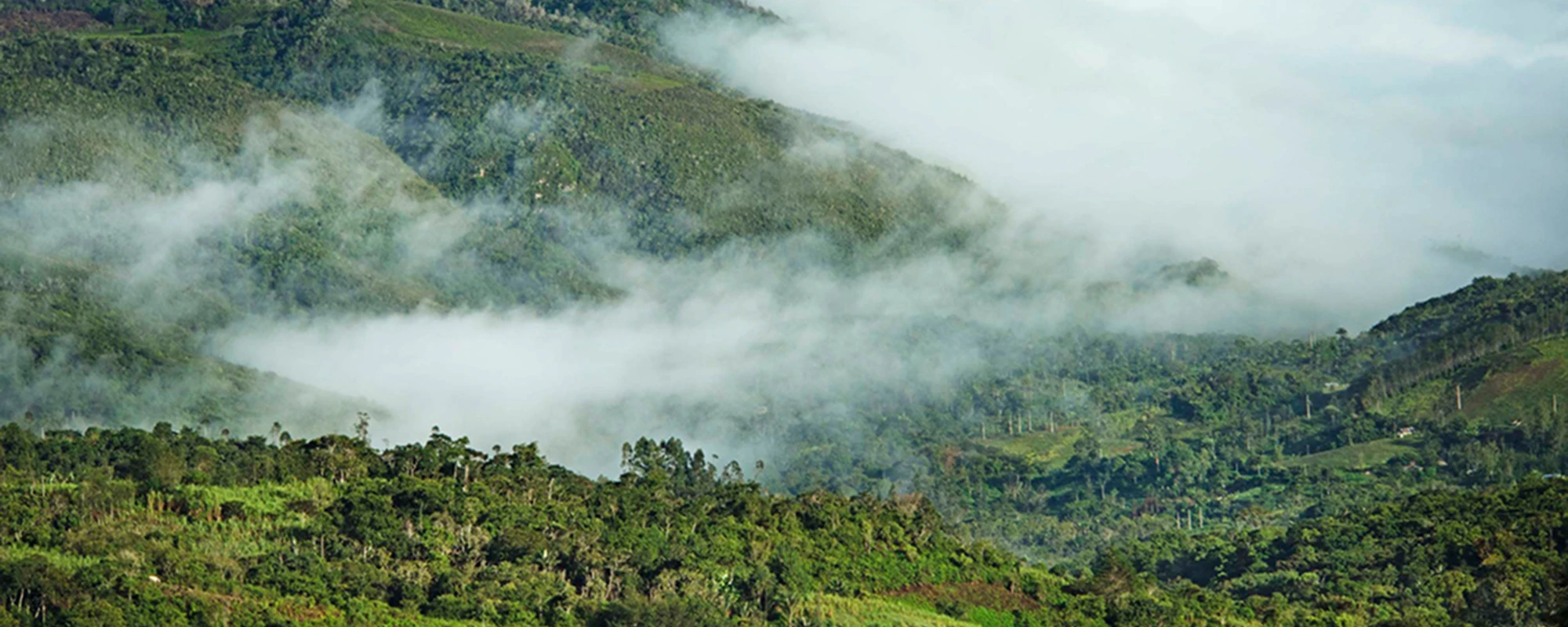
The journey north begins with a gradual transformation of the landscape.
The dry Andean highlands give way to greener slopes. The air becomes heavier. Clouds drift lower. The mountains soften beneath a blanket of vegetation that seems intent on reclaiming everything touched by human hands.
It is here that the Chachapoya civilization emerged.
Known by later chroniclers as the “Warriors of the Clouds,” the Chachapoyas built their settlements in some of the most inaccessible terrain in South America. They occupied a world suspended between mountains and rainforest, creating a culture whose architectural achievements continue to challenge archaeologists and historians today.
Unlike the imperial order of the Incas, the Chachapoyas developed across isolated valleys and ridgelines. Their settlements adapted to landscapes defined by steep cliffs, dense forests, and perpetual mist.
To visit these places is to enter a geography that seems deliberately designed to conceal itself.
Even today, one senses that the mountains are not eager to reveal their secrets.
Kuelap: The Fortress Above the Clouds
Every great civilization leaves behind monuments.
Few leave behind monuments as improbable as Kuelap.
Long before many travelers had ever heard its name, comparisons to Machu Picchu became inevitable. Yet such comparisons ultimately fail to capture its uniqueness.
Machu Picchu feels like a sanctuary.
Kuelap feels like a stronghold.
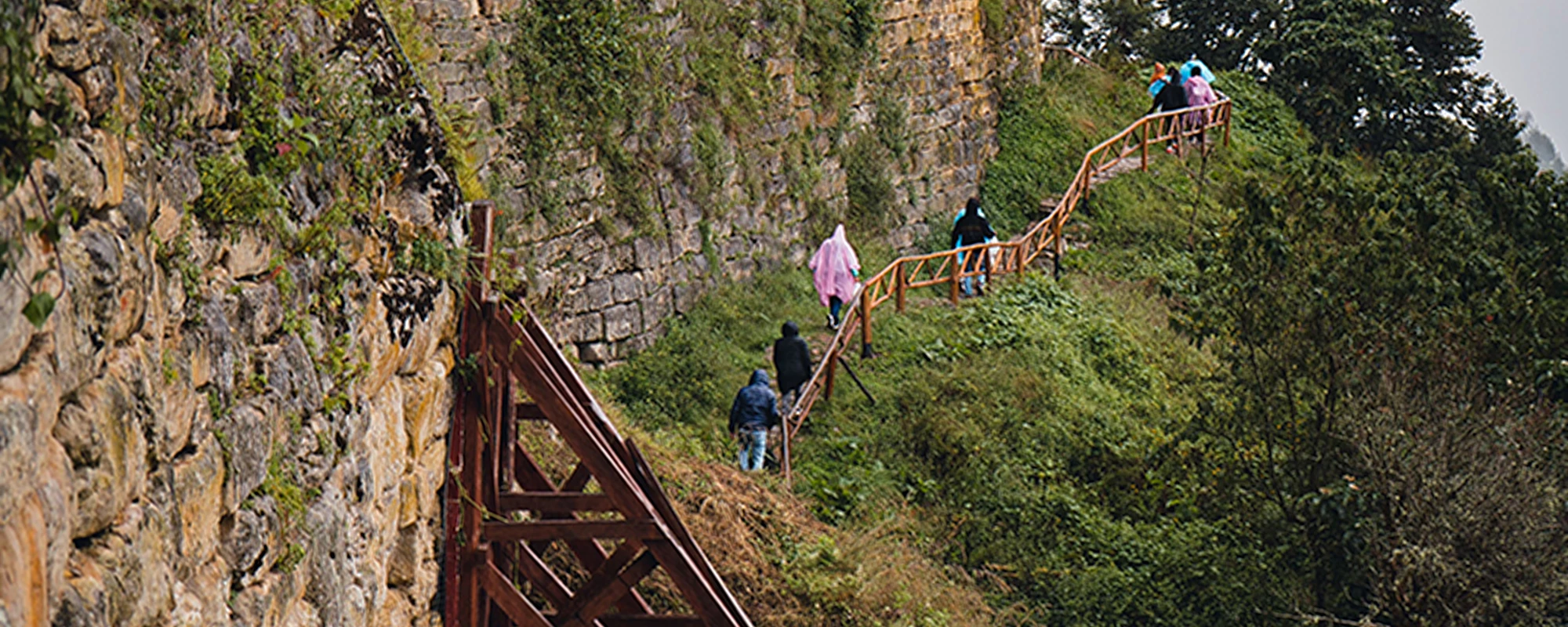
Perched atop a narrow limestone ridge at over 3,000 meters above sea level, the fortress dominates the surrounding landscape with astonishing authority. Massive defensive walls rise from the mountaintop, some reaching heights that rival the most ambitious military architecture of the ancient Americas.
Approaching Kuelap through the cloud forest creates a peculiar sensation.
The fortress rarely reveals itself immediately.
Mist moves across the ridges.
Stone emerges and disappears.
Silhouettes shift.
For a brief moment, it becomes possible to imagine how early explorers must have felt upon first encountering these walls.
Not as tourists.
But as witnesses.
Witnesses to something they could not yet explain.
Within the enclosure, hundreds of circular structures spread across the mountaintop. Decorative friezes carved into stone still display geometric patterns whose meanings remain partially elusive. Pathways weave through the complex with an order that suggests sophisticated planning and social organization.
And yet, despite decades of research, many questions remain unanswered.
That uncertainty is part of Kuelap’s power.
Its greatest allure lies not in what is known.
But in what remains unknown.
Architecture Against Oblivion
One of the most remarkable aspects of Chachapoya architecture is its persistence.
The environment here is relentless.
Humidity, rainfall, vegetation, and time itself conspire against permanence.
And yet these structures endure.
Walls remain standing.
Foundations survive.
Entire settlements continue to emerge from beneath centuries of encroaching forest.
This resilience reveals a profound understanding of landscape.
The Chachapoyas did not simply build within nature.
They negotiated with it.
Stonework follows contours rather than imposing itself upon them. Settlements occupy strategic positions that maximize visibility while remaining naturally protected. Architecture becomes an extension of geography itself.
For modern visitors, this relationship between human ingenuity and natural forces creates a powerful impression.
The ruins feel less like abandoned constructions and more like temporary agreements between civilization and wilderness.
Agreements that nature has slowly begun to renegotiate.
The Houses of the Dead
Beyond Kuelap, the mountains conceal another layer of mystery.
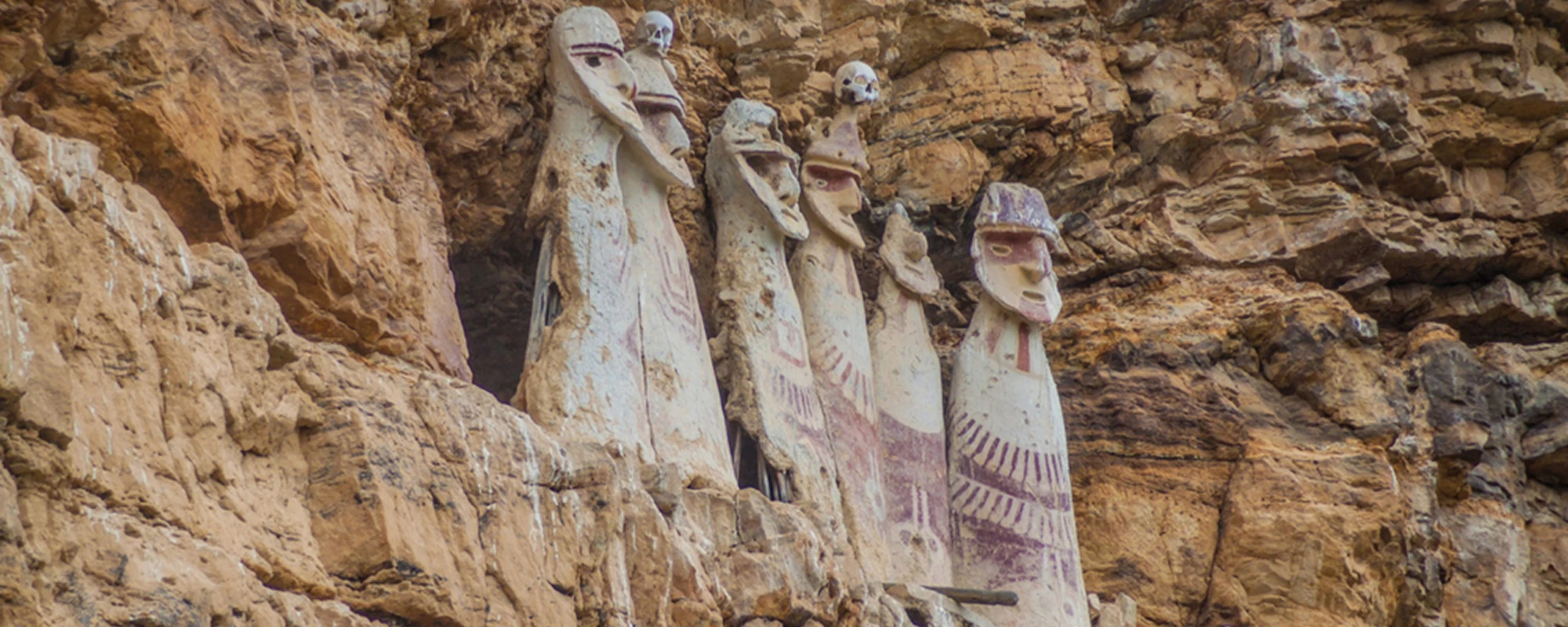
Along sheer cliff faces, impossible to reach without deliberate effort, ancient funerary structures cling to the rock.
The most famous are the sarcophagi of Karajía.
Tall, human-shaped guardians standing silently above the valleys below.
For centuries they have watched over the landscape.
Wind.
Rain.
Storms.
Generations.
Their isolation contributes to their power.
These were not tombs designed to be visited frequently.
They were placed deliberately beyond the reach of ordinary life.
Elsewhere, mausoleums hidden within cliffside recesses preserve traces of a worldview in which death remained intimately connected to the landscape itself.
The mountains were not merely places of residence.
They were places of memory.
The dead remained present.
Embedded within the geography.
Watching.
Waiting.
Remembering.
The Luxury of Discovery
In an age when many of the world’s iconic destinations struggle beneath the weight of their popularity, Chachapoyas offers a different proposition.
Not convenience.
Not spectacle.
Discovery.
The roads are longer.
The distances greater.
The effort more substantial.
And because of this, the reward feels profoundly personal.
Visitors often find themselves standing alone before archaeological sites of extraordinary significance. There are moments when the only sounds are birdsong, distant waterfalls, and the movement of clouds through the forest.
The experience recalls an earlier era of travel.
A time when journeys were motivated not by checklists but by curiosity.
When the destination remained uncertain until the very end.
For sophisticated travelers seeking archaeology without crowds, Chachapoyas represents one of the last great frontiers of cultural exploration in South America.
The Geography of Wonder
Perhaps the most remarkable quality of Chachapoyas is that the landscape itself remains as compelling as the archaeology.
The fortress may draw travelers here.
But it is the environment that stays with them.
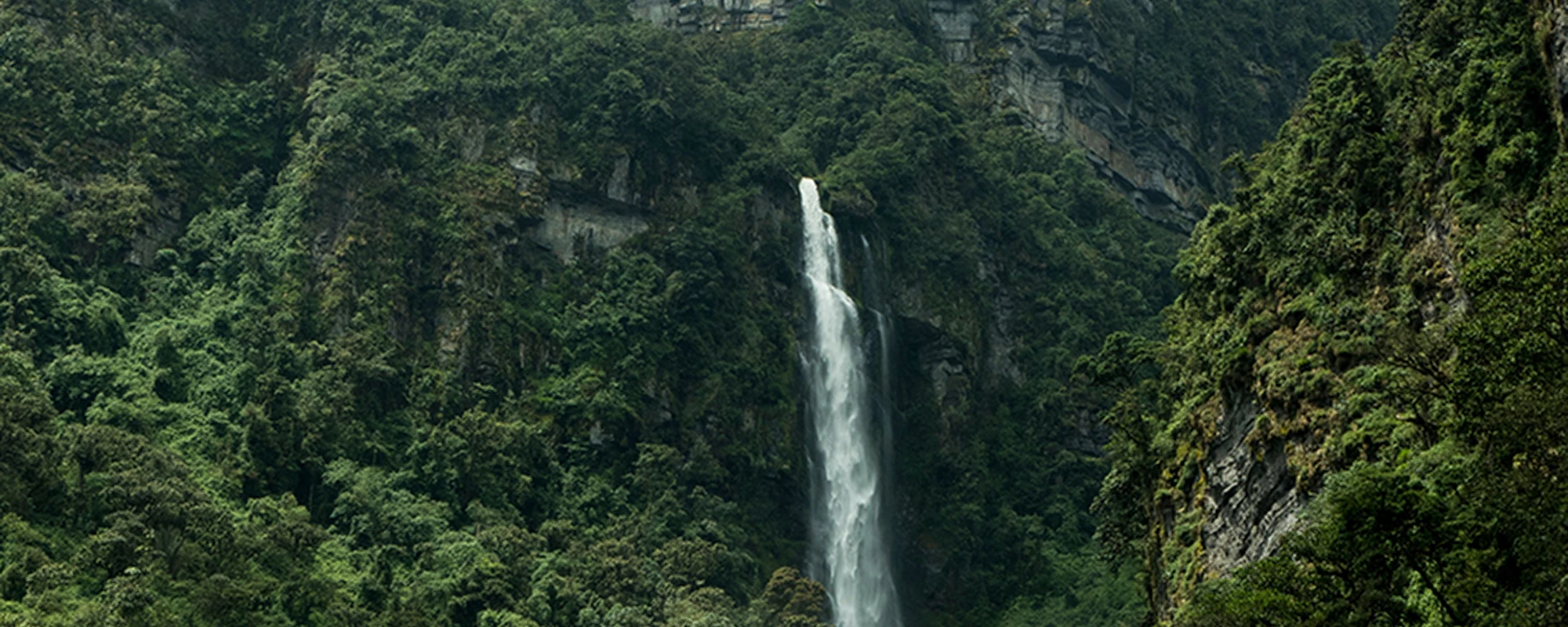
Cloud forests.
Hidden waterfalls.
Remote valleys.
Ancient trails.
The sensation of moving through a world suspended between mountains and sky.
There are places where nature serves as a backdrop to history.
In Chachapoyas, nature and history are inseparable.
The mist does not conceal the story.
It is part of the story.
A New Age of Exploration
As evening settles over the cloud forest and the final layers of mist drift across the ridges, one begins to understand why Chachapoyas continues to exert such a powerful hold on the imagination.
This is not merely an archaeological destination.
It is a reminder.
A reminder that the world still contains places capable of surprising us.
Places where mystery survives.
Places where certainty remains elusive.
Places where discovery still feels possible.
And in an era when so much of the world has already been photographed, catalogued, and explained, that may be the greatest luxury of all.
A Private Expedition into Peru’s Forgotten Kingdom
At Kaymara Luxury Travel, we curate exclusive journeys into the cloud forests of northern Peru, revealing the extraordinary legacy of the Chachapoya civilization through private access, expert interpretation, and carefully designed exploration experiences.
Created for travelers who value archaeology, intellectual discovery, and authentic exploration, these journeys offer access to one of South America’s most compelling and least-visited cultural landscapes.
Because some of the world’s greatest stories are not found in places everyone knows.
They are found in places still waiting to be discovered.