
There are journeys defined by grand monuments.
And there are journeys transformed by unexpected doors.
The South Valley of Cusco belongs to the latter.
For most travelers, the road that stretches southeast from the former Inca capital serves merely as a route. A passage between destinations. A landscape observed through the window of a vehicle on the way to somewhere else.
Yet hidden among quiet villages, fertile fields, and modest adobe facades lies one of the most remarkable artistic treasures in the Americas.
Not palaces.
Not fortresses.
Not archaeological sites.
But churches.
Churches whose exteriors reveal little of the worlds concealed within.
At first glance, villages such as Andahuaylillas, Huaro, or Canincunca appear disarmingly simple. Their plazas remain peaceful. Their streets preserve a rhythm largely untouched by modern tourism. Their churches stand quietly beneath the Andean sky, their adobe walls blending naturally into the surrounding landscape.
Then the doors open.
And everything changes.
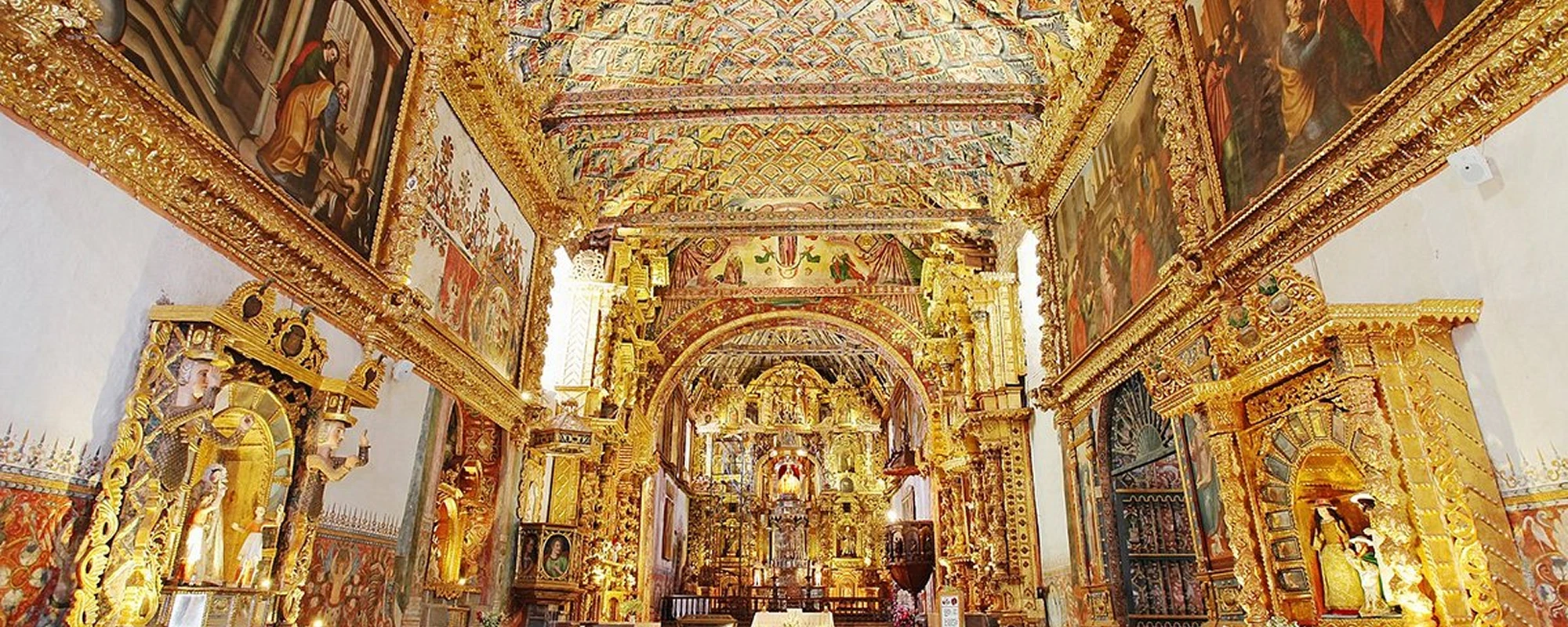
Gold erupts across ceilings.
Angels emerge from painted clouds.
Entire biblical narratives unfold across walls and vaults.
The ordinary gives way to the extraordinary.
And what initially appeared to be a rural chapel reveals itself as one of the most fascinating artistic dialogues ever created between Europe and the Andes.
Beyond the Colonial Narrative
To describe these churches simply as colonial monuments would be to overlook their deeper significance.
Certainly, they were built during the centuries following the Spanish conquest. European artistic traditions arrived here alongside missionaries, painters, architects, and religious orders seeking to establish a new spiritual order in the Andes.
Yet history rarely unfolds as a one-sided story.
What emerged in the South Valley was not merely the transplantation of European art.
It was transformation.
Adaptation.
Negotiation.
The churches became places where two worlds encountered one another.
The result was neither entirely European nor entirely Andean.
Instead, a new visual language began to emerge.
One capable of expressing both traditions simultaneously.
Today, these chapels remain among the finest surviving examples of cultural syncretism anywhere in the Americas.
Andahuaylillas: The Sistine Chapel of the Andes
Among art historians, Andahuaylillas has earned an ambitious nickname.
“The Sistine Chapel of the Andes.”
At first, the comparison may appear exaggerated.
Until one steps inside.
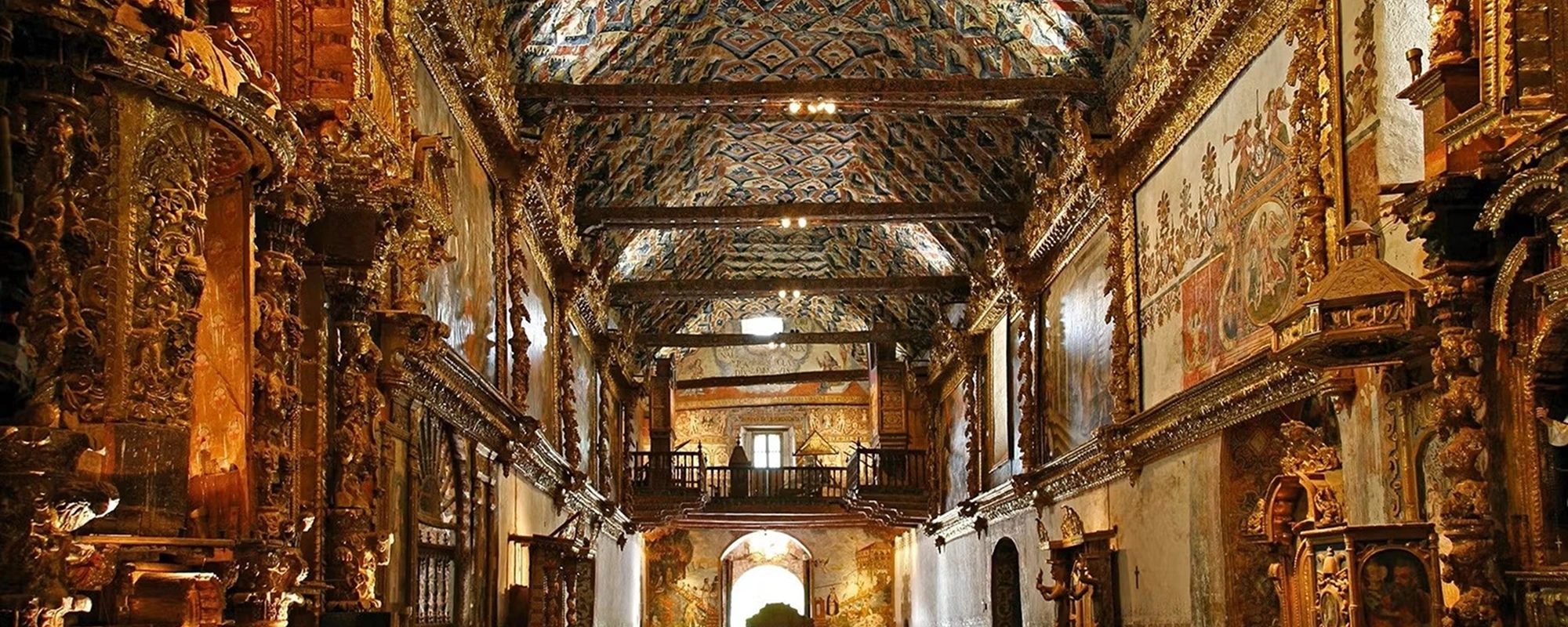
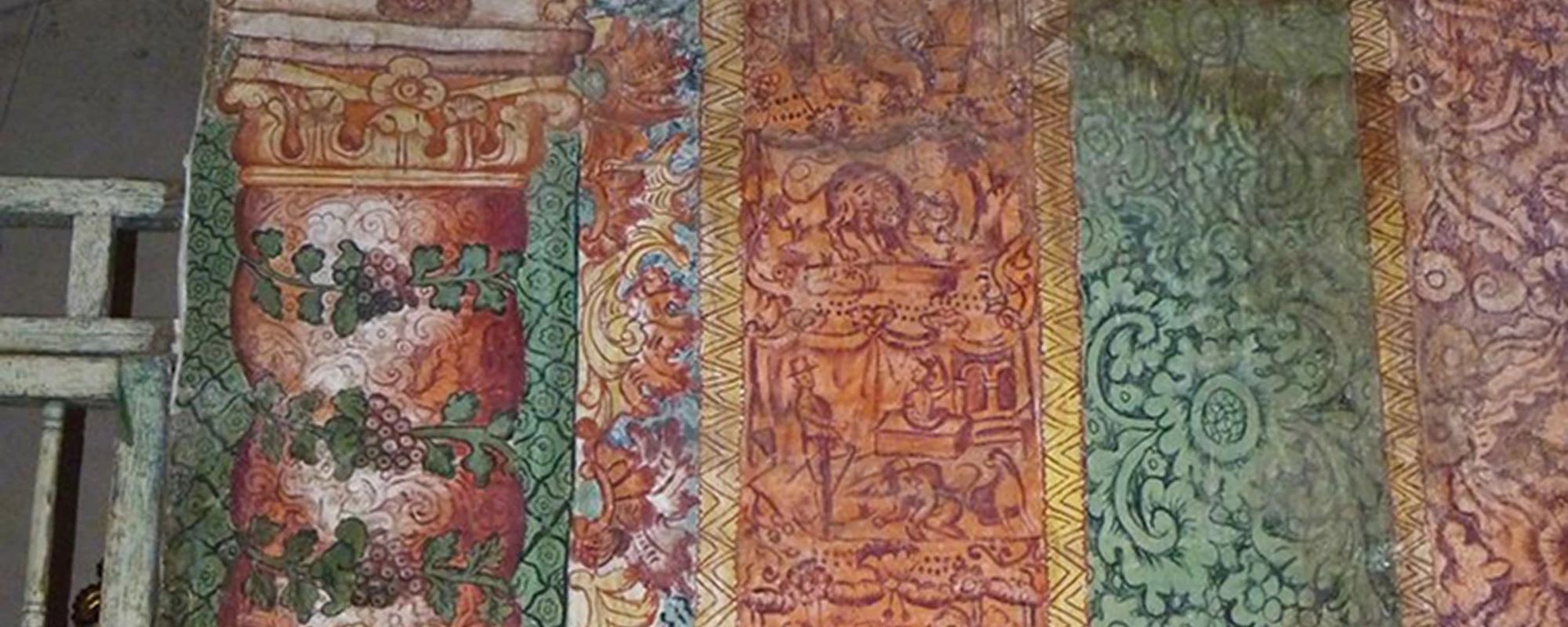
The church interior unfolds as an immersive universe of color, symbolism, and devotion. Every available surface seems animated by artistic intention. Elaborate murals cover the walls. Decorative motifs spread across ceilings and columns. Gold leaf reflects the changing light throughout the day, creating an atmosphere that feels simultaneously intimate and monumental.
Yet the true fascination lies beyond its visual splendor.
Look carefully.
Beneath the European iconography, subtle traces of Andean understanding begin to appear.
Local flora and fauna enter sacred compositions.
Landscapes familiar to Indigenous communities become part of biblical narratives.
Symbolic references that would have been immediately recognizable to Andean audiences coexist alongside Christian teachings.
The church does not merely tell a religious story.
It tells a cultural story.
A story of translation.
Of adaptation.
Of two systems of meaning learning to coexist within the same sacred space.
Huaro and the Theatre of Eternity
Further along the valley, another church presents a different perspective on this encounter between worlds.
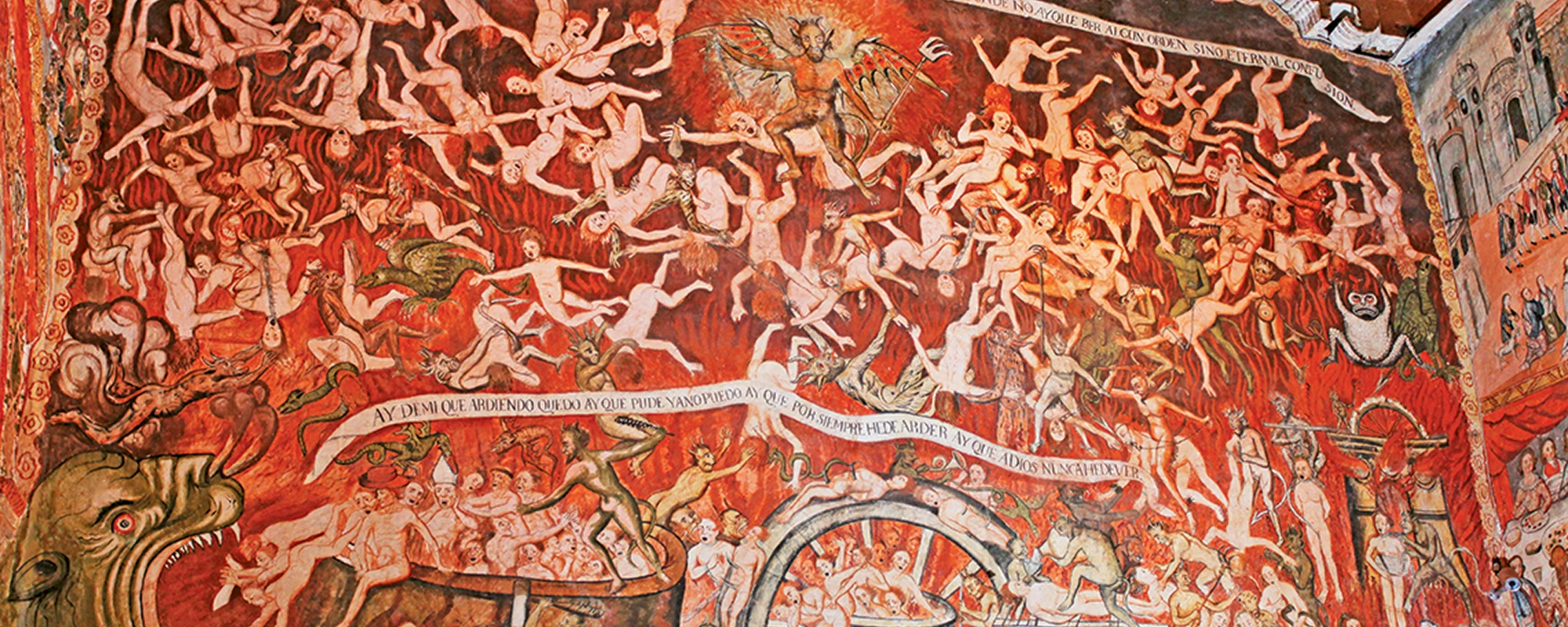
The church of Huaro possesses a more dramatic temperament.
Its paintings are less concerned with celestial harmony and more occupied with moral reflection.
Walls become stages.
Heaven and hell unfold through vivid imagery.
The afterlife is rendered with startling intensity.
For modern visitors, the experience often feels unexpectedly contemporary.
Not because of the subject matter.
But because of the emotional power with which it is presented.
The paintings invite questions rather than offering simple answers.
They explore fear, redemption, mortality, and transcendence through visual narratives that continue to resonate centuries later.
Yet even here, local interpretations subtly reshape imported ideas.
The Andes are never entirely absent.
They linger in details.
In colors.
In symbols.
In the sensibilities of the artists themselves.
The Language of Gold and Earth
Perhaps the most intriguing aspect of these churches is the relationship between their materials.
Gold and adobe.
Two seemingly opposite elements.
One associated with grandeur.
The other with humility.
One imported through imperial ambition.
The other rooted deeply in local tradition.
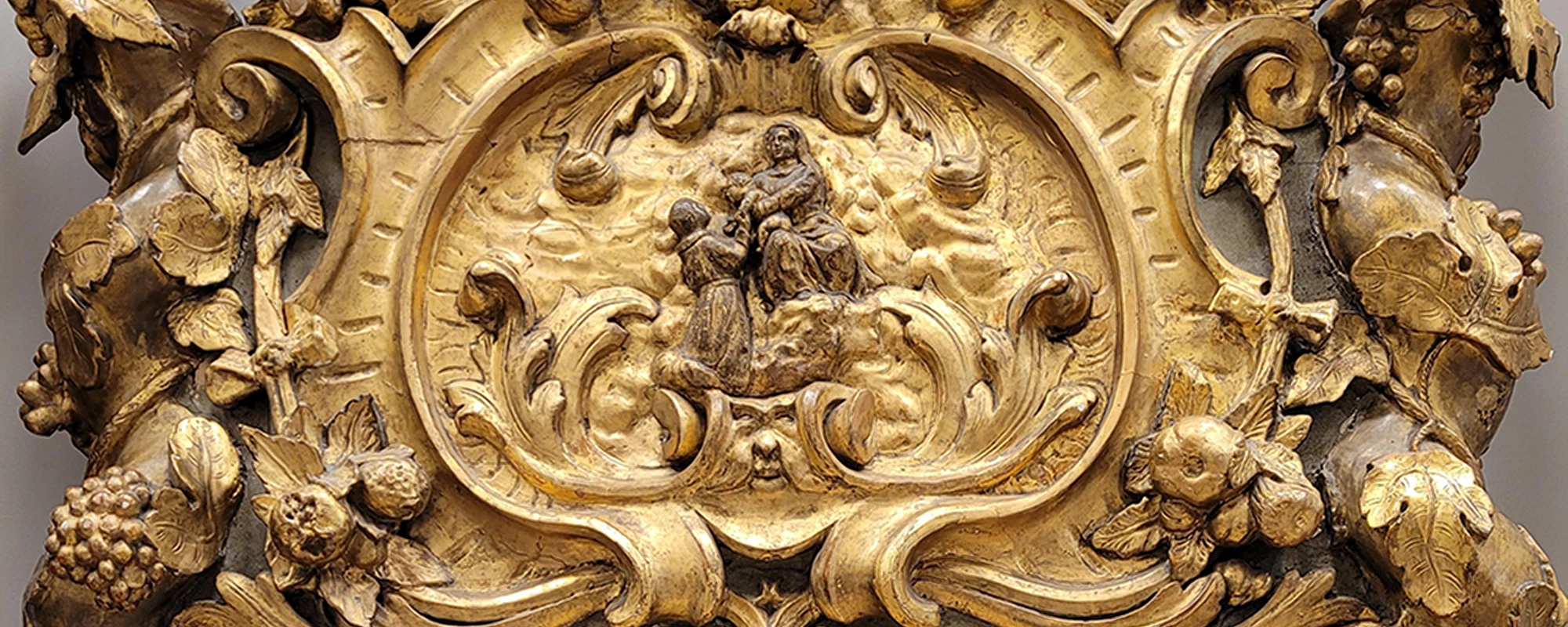
Yet together they create a uniquely Andean aesthetic.
The adobe walls anchor the churches to the landscape.
The gilded interiors lift them toward the celestial.
Earth and heaven.
Matter and spirit.
The combination feels symbolic in ways that extend beyond architecture.
These buildings embody the meeting of worlds.
Not through conflict alone.
But through creative fusion.
The result is an artistic expression that could only have emerged in the Andes.
Reading Between the Images
For many visitors, the greatest pleasure comes from slowing down.
These churches reward attention.
The first impression is inevitably visual.
The second is intellectual.
The third becomes almost archaeological.
Details reveal themselves gradually.
A bird that should not be there.
A flower native to the Andes appearing within a biblical scene.
A decorative motif that echoes pre-Hispanic symbolism.
A saint depicted with attributes that seem strangely familiar to local traditions.
The churches become texts waiting to be read.
Layer by layer.
Image by image.
Meaning by meaning.
And like all great works of art, they never fully surrender their mysteries.
The Hidden Renaissance of the Andes
European travelers often arrive expecting to encounter Inca heritage.
What they rarely anticipate is the richness of Peru’s colonial artistic legacy.
And yet the South Valley preserves one of the most extraordinary collections of religious art in the hemisphere.
These churches challenge conventional narratives.
They demonstrate that the Andes were not merely passive recipients of European influence.
They were active participants in its transformation.
The artists, artisans, and communities who created these spaces produced something entirely original.
A distinctly Andean Baroque.
A uniquely American Renaissance.
A cultural achievement whose sophistication remains underestimated beyond specialist circles.
For those who appreciate art history, architecture, theology, and cultural exchange, these chapels offer an experience every bit as compelling as the region’s more famous archaeological sites.
Perhaps even more so.
Because they continue to surprise.
The Quiet Luxury of Understanding
As afternoon light filters through centuries-old windows and illuminates traces of gold across painted walls, one begins to understand why these places leave such a lasting impression.
Their beauty is undeniable.
But beauty alone is not what lingers.
It is complexity.
The realization that culture is rarely fixed.
That identity is rarely singular.
That great art often emerges from encounters rather than certainties.
In the South Valley, faith became dialogue.
Architecture became translation.
And art became a bridge between worlds.
For travelers willing to look beyond the obvious, these churches reveal one of Peru’s most profound stories.
Not carved into stone.
But painted in gold.
A Private Journey Through the Sacred Art of the Andes
At Kaymara Luxury Travel, we curate intimate journeys through the hidden chapels of Cusco’s South Valley, revealing the extraordinary artistic and cultural legacy that flourished between the Andean and European worlds.
Designed for travelers passionate about art history, architecture, sacred spaces, and intellectual discovery, these private experiences offer access to some of the most remarkable and least understood masterpieces of the American Baroque.
Because some of the greatest treasures in Peru are not found on mountaintops.
They are found behind quiet adobe walls, waiting to be discovered.